Network NMEA2000
Network NMEA2000 connects the application to the standalone Linux RayNetworkBridge SocketCAN TCP bridge using the existing RN2K/1 session protocol. It is not a transparent arbitrary two-network gateway.
Prepare the bridge host
The Linux host needs Python 3.9+, iproute2 and an already configured healthy CAN interface. The bridge does not choose bitrate, raise can0 or install startup services. Its default bind is loopback. Configure the bridge interface, bind/port, allowed client IPs and a protected random access-key file. Do not expose the listener directly to the Internet.
For an untrusted network, use an authenticated tunnel. A typical SSH forwarding pattern is ssh -N -L 29501:127.0.0.1:29501 user@linux-host with the bridge bound/allowlisted for loopback; configure the client for 127.0.0.1:29501. Replace placeholders with authorized host details. Keep bridge service configuration separate from client connection settings.
Configure the client
- Stop Sending, then select Network NMEA2000 in Setup.
- Enter Host/IP, TCP port and the exact remote interface name.
- Choose RX only or RX/TX capable. The latter is a capability ceiling, not current permission to transmit.
- Use a distinct unique device number for simultaneous clients and an appropriate preferred source address.
- For TX-capable use, enter the bridge key through secure storage. Do not display it in screenshots/logs.
- Save, then click Connect / reconnect saved network configuration.
Each connection starts RX-only. Read its status in Setup and the main window. After a fault or disconnection, reconnect deliberately and authorize output again when ready.
Authorize only the task
Enable Sending grants ordinary instrument output in Generate, subject to current readiness and instrument Enable. Discover/Refresh/Retrieve in the route dialog instead authorize a bounded read-only route-service session. Clean service completion or cancellation returns to RX-only. Mode/configuration changes, disconnect and Stop/F12 revoke the relevant authorization.
HMAC authorizes TX without sending the shared key itself, but the transport is not TLS; CAN identities and traffic are visible without a tunnel/trusted LAN. IP allowlisting applies to RX too. A duplicate NAME from another participant revokes the affected TX session; fix identity conflicts instead of defeating the guard.
Use a compatible Axiom route service when retrieving chartplotter routes. For local simulation without a CAN interface, the bridge also supports virtual buses; choose the bus matching your intended connection.
Illustrated controls
Reading guide: Host/port and remote interface identify the bridge endpoint. Connection capability is separate from the TX access key and later per-session authorization. Connect/reconnect uses saved configuration.
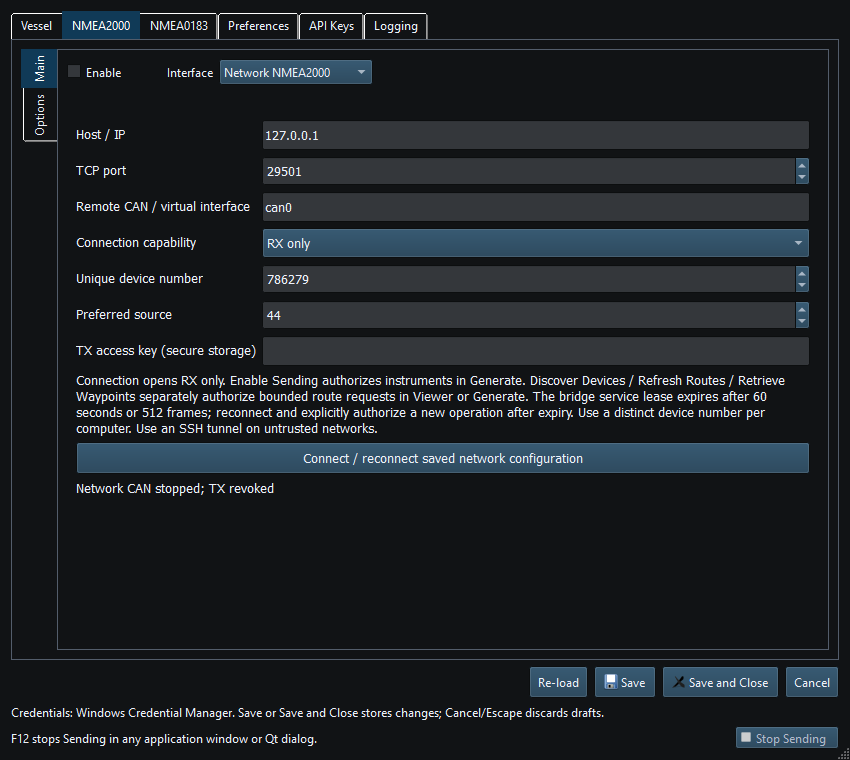
Figure 65. Network NMEA2000 host, port, interface and access settings in Setup. Click to enlarge.
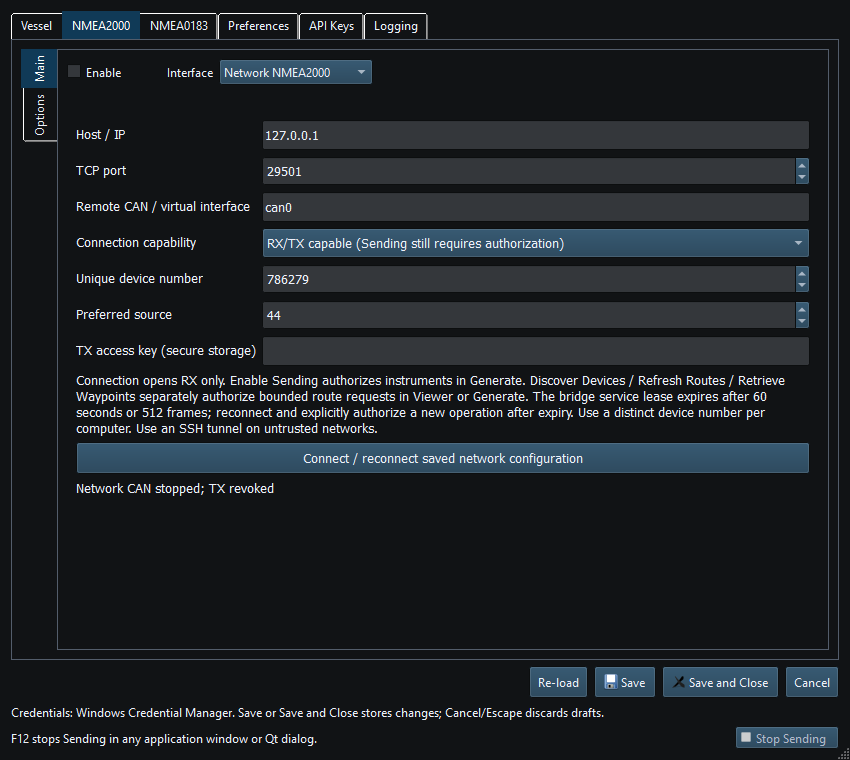
Figure 66. RX/TX-capable network configuration is separate from explicit instrument Sending and route-service authorization. Click to enlarge.
Related topics
NMEA2000 Overview · NMEA0183 Overview · SocketCAN · CANable SLCAN · Waveshare USB-CAN-A · Actisense NGT-1 · Signal K · Device Discovery and Diagnostics · Connection Troubleshooting · Enable, Dispatch and Sending · Route Overview · Engineering Units